

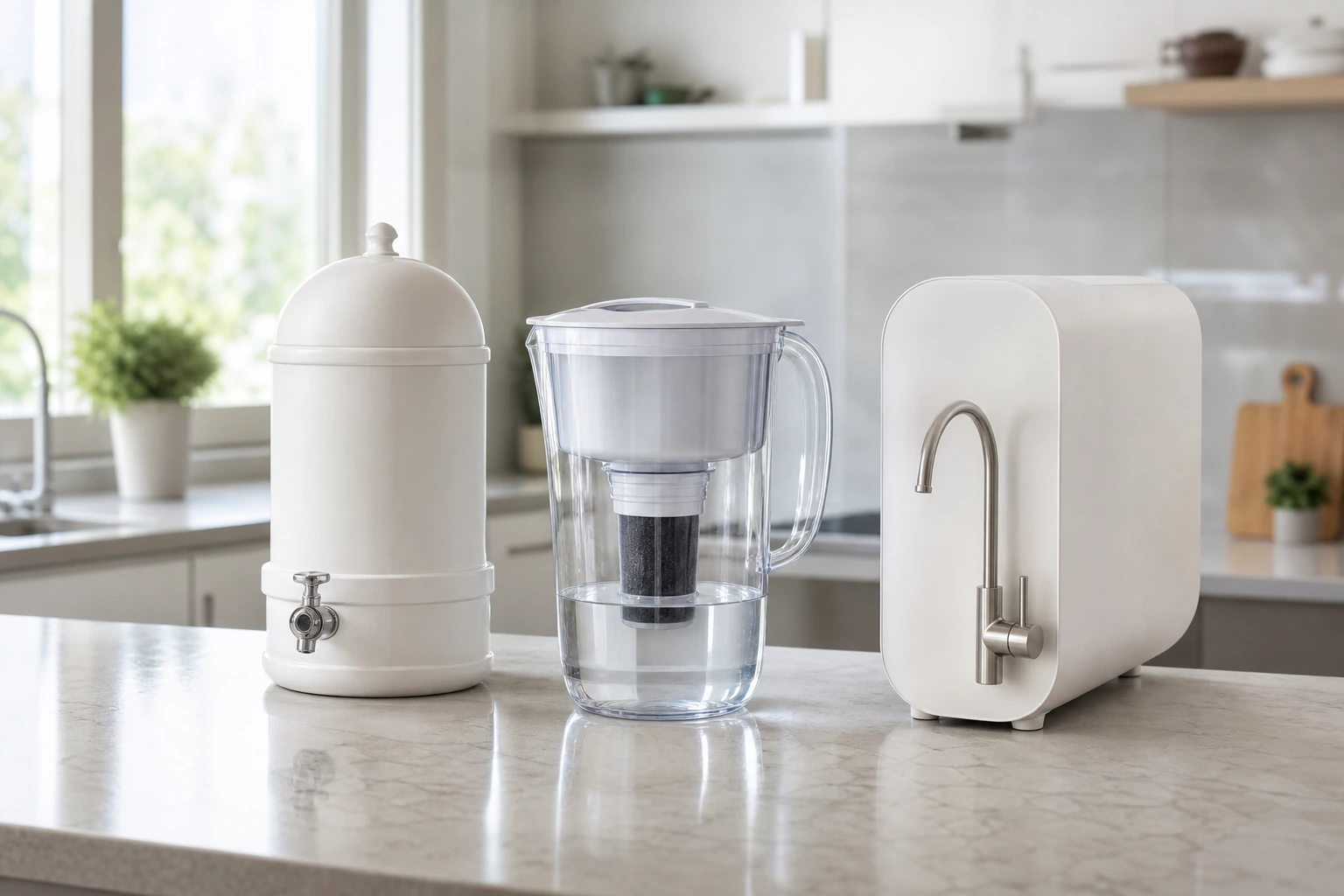
Water filters come in a few main types, and each one works a little differently. The main ones are ceramic, carbon, reverse osmosis, and UV. Knowing the difference makes it easier to pick the right one for your home.
How does a water filter work?
A water filter passes tap water through a barrier. The barrier traps dirt, germs, or chemicals. Clean water comes out the other side. Different filters trap different things. Some only block sediment. Others also reduce taste, smell, and dissolved salts. What you need depends on your water. You can compare water filters in Sri Lanka by the method they use.
Ceramic water filters
A ceramic filter uses a hard clay candle with tiny pores. Those pores block dirt, mud, and many germs. Water drips through slowly and comes out clear. You clean the candle with a soft brush. One candle can last a long time. Ceramic filters work well when the water looks cloudy.
Carbon water filters
A carbon filter uses activated charcoal. It removes bad taste and smell, and it can also trap chlorine and some chemicals. Water usually tastes fresher after that. Carbon alone does not remove all germs. Many jug and tap filters use carbon. Replace the carbon every two to three months.
Reverse osmosis (RO) filters
An RO filter pushes water through a very fine membrane. That membrane blocks the smallest particles. It removes dissolved salts, metals, and most germs. RO gives you the cleanest drinking water. It also wastes some water while it runs. It needs more space and usually costs more. RO suits homes with hard or salty water.
UV water purifiers
A UV purifier shines ultraviolet light on the water. The light kills germs and bacteria. It does not remove dirt or chemicals, so people usually put a carbon or ceramic filter first. UV needs power to work. It is a final safety step. The World Health Organization sets safety standards for drinking water and home treatment.
Which water filter should you choose?
Match the filter to the problem in your water. Choose ceramic for cloudy or dirty water. Choose carbon for bad taste and smell. Choose RO for salty or hard water. Choose UV to kill germs as a final step. Many homes use two types together. Not sure whether you need one at all? First check whether tap water is safe to drink in Sri Lanka.
Ready to choose? Shop water filters at TNS Go and pick the type that fits your water.
Frequently Asked Questions
What are the main types of water filters?
The main types are ceramic, carbon, reverse osmosis, and UV. Ceramic blocks dirt and many germs. Carbon helps with taste and smell. RO removes dissolved salts. UV kills bacteria.
Which water filter removes the most?
A reverse osmosis filter removes the most. It uses a fine membrane to take out dissolved salts, metals, and most germs. It works best with hard or salty water.